
Share
Share
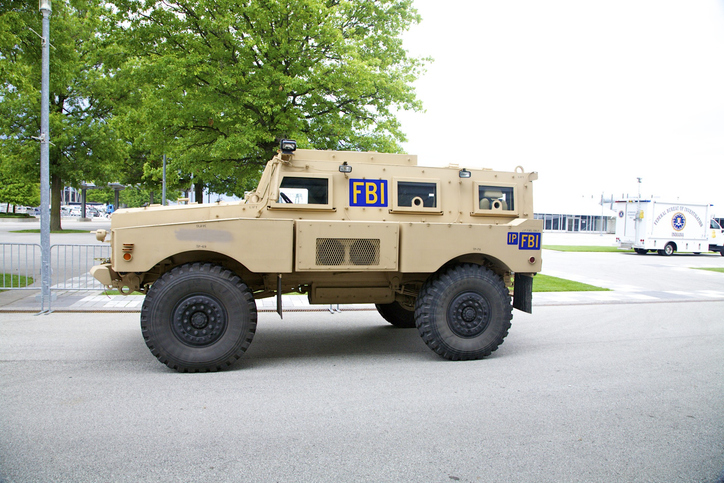
What to do When the FBI Wants to “Just Ask Some Questions”
This article seeks to answer the age-old question: What to Do if FBI Agents Come to Your House in Colorado?
It’s a Sunday afternoon, and you’ve just returned to your home in Colorado after a great weekend of hiking and camping in the mountains and forests outside of town. Nothing in the next few hours could put a damper on your weekend as a whole, right?
Wrong.Your extra-large travel backpack isn’t even emptied when you hear a knock at the door, and suddenly two FBI agents are at your door, asking you about your involvement in an illegal racketeering scheme involving crystal meth and some of your rock-climbing friends (apparently, they’ve been climbing over more than one kind of “rock”).
What you do next could determine whether or not you get to move on with your life or spend the next five years in a federal prison facility.
Evergreen Attorneys: The Federal Criminal Defense Difference
We pride ourselves on being different from other lawyers. You can read more about our law firm all over our website. But here are just a few reasons we are very different from the traditional law firms out there:
- We only focus on federal cases and high-stakes felonies. No family law, no medical malpractice, no transactional lawyers, and no traffic tickets.
- We only employ experienced partner-level attorneys. No fresh-faced associates right out of law school.
- We are a boutique federal defense law firm. We are selective with our cases and every decision we make is tailored toward providing client-first exceptional criminal defense.
- Evergreen Attorneys handles criminal cases nationwide. We are not interested in being golfing buddies with the prosecutor.
Who are FBI agents and what can they do to me?
“FBI” stands for the “Federal Bureau of Investigation.” It is a federal law enforcement agency that has maintained jurisdiction over every state in the United States, including the State of Colorado, since its inception in the early 20th century.
The FBI’s main job is to gather the information needed for the United States attorney general to accuse and then prosecute individuals and groups of committing federal crimes within the United States.
While today’s media illuminates the buffoonery of a few particular individuals in the FBI, you should know that the majority of FBI agents are anything but buffoons. They have extensive training and know how to get the information and leverage they want, even if it comes at your expense.
If their investigation implicates you in the commission of a federal crime, the FBI can get you sent to jail for a long, long time. Fremont County, Colorado may be beautiful this time of year, but it ain’t so pretty when you’re looking at it through a barred window while bumping shoulders with the Boston Bomber and El Chapo.
Okay, I have to say SOMETHING to the FBI agents while they’re here. What should I do, and what shouldn’t I do?
Rule Number 1: Shut up and don’t talk
No, you should shut up and say nothing. Period. But we will give you an entire article because we see almost every client (guilty or innocent) feel the need to talk to FBI agents when they show up to their home in Colorado.
Rule Number 2: If you don’t follow Rule Number 1, then make sure to tell the truth
First and foremost, you must never try to lie to FBI agents. Even if you haven’t done anything up to this point that would implicate you in a federal crime, lying to the FBI agents now in an ill-advised attempt to get them to leave you alone will add a federal crime to your rap sheet under 18 U.S.C. §1001(a):
“Except as otherwise provided in this section, whoever, in any matter within the jurisdiction of the executive, legislative, or judicial branch of the Government of the United States, knowingly and willfully-
- Falsifies, conceals, or covers up by any trick, scheme, or device a material fact;
- Makes any materially false, fictitious, or fraudulent statement or representation; or
- Makes or uses any false writing or document knowing the same to contain any materially false, fictitious, or fraudulent statement or entry;
Shall be fined under this title, imprisoned not more than 5 years or, if the offense involves international or domestic terrorism (as defined in section 2331), imprisoned not more than 8 years, or both.”
Unfortunately for you, the “no lying” rule doesn’t apply both ways. FBI agents can lie to you if they decide that it’s instrumental to their investigation. Don’t accept their statements at face value: they are not your friends, and they are not here to help you.
There’s a vital distinction to be made here: you shouldn’t tell them lies, but that doesn’t mean you have to tell them every truth right here and now. In general, you shouldn’t answer their questions or let them into your residence unless presented with a warrant signed by a federal judge.
Rule Number 3: Without a warrant, you do not need to agree to a search
Without a warrant, FBI agents cannot force you to comply with a search and seizure, be taken into their custody, or otherwise be interrogated.
On the other hand, refusal to even acknowledge these FBI agents may cast more unwanted suspicion your way. That’s why you should hire an attorney specializing in federal criminal defense to advise you from this point forward.
Even if you haven’t hired one yet, you have the right to defer FBI questioning until you have retained an attorney. Your attorney will then be able to communicate directly with any FBI agents on your behalf and make sure that you don’t say anything that would expose you to unnecessary liability or risk.
Even if you do hire an attorney later this week to represent you, if you say too much to the FBI agents now without your attorney’s presence, you may accidentally say something that can be used against you with no “take backs” at your disposal.
You should therefore tell the FBI agents today that you will not speak to them without an attorney. Take down their contact information and tell them that you will forward it to your attorney when you have hired one for future correspondence.
I safely got the FBI agents to leave my Denver house, and they said they will reach back out to me on another day. Now what?
While you yourself may not be in the business of investigation, information is power in this situation. Colorado is a one-party consent state when it comes to recording your own conversations under C.R.S. §§ 18-9-303 & 18-9-304, but chances are the FBI agents planned ahead and came by without warning to keep you from setting up recording devices prior to their visit.
If you didn’t record the conversation, don’t fret, as it couldn’t be helped. However, if you do happen to have security cameras or anything like a Ring doorbell already in place prior to the FBI agents visiting your house, download the recording so you can provide it to your attorney later. Even if you said something you shouldn’t have, it’s best for your attorney to be aware of it sooner rather than later so they can mitigate any damaging effects.
Additionally, write down your recollection of the chain of events that just transpired on your front door in a paper journal that you can keep to yourself and provide to your attorney. While your stress levels may still be high, you should still document as much as you can as soon as possible to reduce the chances of forgetting or misremembering any crucial details, no matter how small they may seem in the heat of the moment. When writing your side of the story, answer questions such as:
- Did the FBI agents identify any specific people, places, groups, or things that you already knew about?
- How many FBI agents visited you? What were their names, and how can you contact them?
- What questions did the FBI agents want you to answer? Did their questions relate to anything that you might have known about prior to their visit?
- Did you let the FBI agents in or around your residence? Is there anything that they may have seen in or around your house or on your property that you should be concerned about?
I’ve done everything you said. Now what kind of attorney do I need after the FBI visits my home or business?
Once you’ve gathered as much evidence and clues of your own as possible, you need to retain an attorney as soon as possible. When there are a wide variety of attorneys who are licensed to practice in federal courts, and all of them are spread across all fifty states, it’s easy to face decision paralysis or pursue attorneys who are wrong for your case.
As a Coloradan, you want someone who understands your background and circumstances with firsthand familiarity. Plus, you’ll want to save money on the cost of transportation in case you and your attorney both need to attend a hearing at a Colorado federal courthouse, or if you need to have an in-person meeting with your attorney. Why fly out a Louisiana lawyer when someone down the block can do it better?
That’s where Evergreen Attorneys comes in. Based in Colorado, Attorney Zachary Newland is a seasoned veteran with over ten years of experience in federal criminal defense cases.
When you are a client, he will stand in your corner and unflinchingly protect you from the force of the entire federal government when push comes to shove. If you have been contacted by FBI agents in Colorado, contact Evergreen Attorneys today by calling (303) 948-1489 or emailing [email protected].

Zachary Newland
Zachary Newland is an attorney, author, aspiring BBQ connoisseur, and enthusiastic, but mediocre skier. Zachary's law practice is focused on federal criminal defense, federal appellate advocacy including post-conviction remedies, civil rights litigation, and complex trial work. Zachary lives in Evergreen, Colorado with his family. Reach out today
STAY IN THE LOOP
Subscribe to our free newsletter.


Written by Zachary Newland, Founding [...]