Share
Share
Written by David Boyer, Partner. Last updated September 2, 2026.
Federal Appeals Lawyer in Minnesota
On This Page
- Federal Criminal Appeals in the District of Minnesota
- The 14-Day Notice of Appeal Deadline
- Federal Charges and Investigations Leading to Appeals in Minnesota
- Protecting Your Rights During a Federal Investigation or After Sentencing
- Why Defendants Choose Evergreen Attorneys for Federal Appeals
- How Evergreen Attorneys Handles Federal Criminal Appeals from Minnesota
- Frequently Asked Questions
A federal criminal conviction in Minnesota can result in years of imprisonment, substantial fines, restitution orders, and lasting collateral consequences. If you were convicted or sentenced in the U.S. District Court for the District of Minnesota, the federal appellate process offers a structured path to challenge legal errors, but the window to act is extremely narrow. The criminal notice of appeal deadline is generally 14 days, and missing it can permanently foreclose a direct appeal.
If federal agents have contacted you or you have received a federal document, contact Evergreen Attorneys at (303) 948-1489 before responding or producing information.
Federal Criminal Appeals in the District of Minnesota
The U.S. District Court for the District of Minnesota is a single federal judicial district that serves all 87 Minnesota counties. The court maintains divisional offices in Minneapolis, St. Paul, Duluth, and Fergus Falls. All federal appeals in the District of Minnesota are heard by the U.S. Court of Appeals for the Eighth Circuit.
The Eighth Circuit reviews criminal appeals on the existing district court record. It does not conduct a new trial or receive new evidence. Instead, the appellate panel examines whether preserved legal errors occurred during trial proceedings, at sentencing, or in the district court’s handling of pre-trial and post-trial motions. This distinction is critical: the issues available on appeal are largely determined by what trial counsel preserved in the district court.
An Eighth Circuit criminal appeal attorney must understand both the procedural rules governing federal appellate practice and the substantive law at issue in the underlying conviction. Errors in jury instructions, evidentiary rulings, constitutional violations, sentencing guideline calculations, and the application of statutory mandatory minimums are among the most common grounds for relief.
The 14-Day Notice of Appeal Deadline
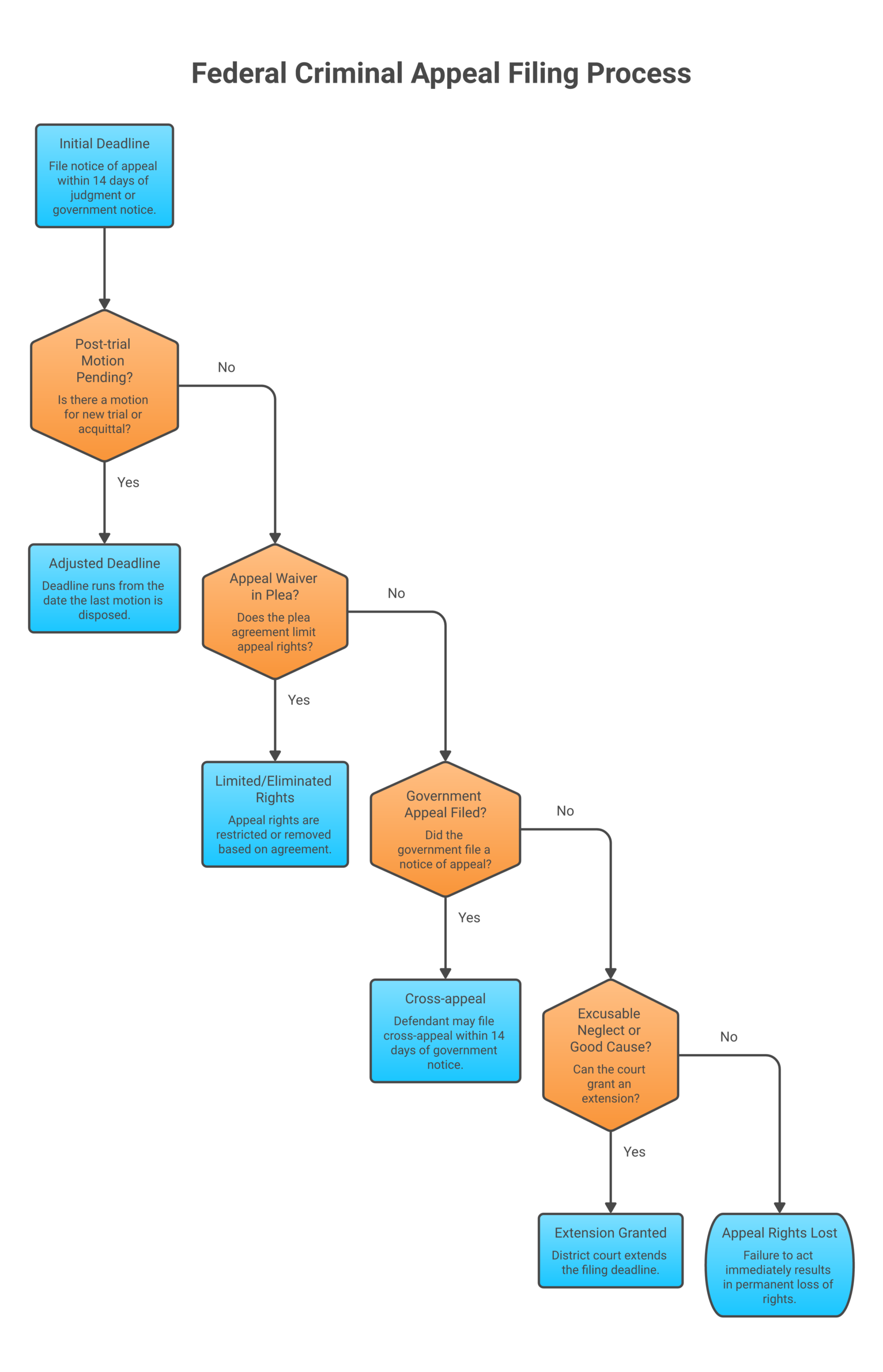
Under Federal Rule of Appellate Procedure 4(b), a criminal defendant must file a notice of appeal in the district court within 14 days after the later of the entry of the judgment or order being appealed, or the filing of the government’s notice of appeal. This is one of the shortest deadlines in federal practice, and courts enforce it strictly.
Several qualifications apply to this general rule:
- If a timely post-trial motion (such as a motion for a new trial or a motion for judgment of acquittal) is pending, the appeal deadline may run from the date the court disposes of the last qualifying motion.
- A plea agreement may contain an appeal waiver that limits or eliminates the right to appeal certain issues, including the sentence.
- The government has 30 days to file its own notice of appeal, and a defendant may file a cross-appeal within 14 days of the government’s notice.
- The district court may extend the filing deadline upon a showing of excusable neglect or good cause, but extensions are neither automatic nor guaranteed.
Because the federal criminal notice of appeal deadline in Minnesota is so short, a defendant who is considering an appeal must act immediately after sentencing. Waiting even a few days can make the difference between preserving appellate rights and losing them permanently.
Federal Charges and Investigations Leading to Appeals in Minnesota
The U.S. Attorney’s Office for the District of Minnesota prosecutes a range of federal offenses. Cases that frequently generate appellate issues include:
- Narcotics offenses: Federal drug conspiracy and distribution charges often involve lengthy mandatory minimum sentences, cooperator testimony, and complex sentencing calculations under the federal guidelines.
- Wire fraud and mail fraud: These charges carry substantial statutory maximums and can involve disputed loss calculations that directly affect the sentence.
- Tax fraud: Criminal tax prosecutions raise evidentiary issues around willfulness and the admissibility of financial records.
- Illegal firearms offenses: Federal gun charges, including felon-in-possession cases under 18 U.S.C. § 922(g), can present constitutional and statutory interpretation questions.
- Healthcare fraud: Cases involving allegations of billing fraud, kickback schemes, or false claims generate complex appellate records.
Each category produces distinct appellate issues. An Eighth Circuit criminal appeal attorney must identify which errors were preserved, which standards of review apply, and whether the record supports the arguments available on appeal.
Protecting Your Rights During a Federal Investigation or After Sentencing
Whether you are under federal investigation in Minnesota or have already been convicted and sentenced, the decisions you make in the days immediately following government action can determine whether meaningful legal options remain available.
If you receive a target letter, a grand jury subpoena, or a visit from federal agents, do not provide statements, documents, or electronic devices without first consulting experienced federal defense counsel. Anything you say or produce can be used in a subsequent indictment or at trial, and voluntary disclosures made without legal guidance are rarely beneficial.
If you have already been convicted and sentenced in the District of Minnesota, the most urgent step is determining whether the 14-day notice of appeal deadline has passed. If it has not, filing a timely notice of appeal preserves the right to challenge the conviction or sentence in the Eighth Circuit. If the deadline has passed, other post-conviction remedies, including motions under 28 U.S.C. § 2255, may still be available, but these carry their own strict procedural requirements and limitations periods.
Do not assume that your trial attorney will automatically file an appeal or that the court will notify you of the deadline. The responsibility to act falls on the defendant, and the consequences of inaction are severe.
Why Defendants Choose Evergreen Attorneys for Federal Appeals
Evergreen Attorneys is a federal criminal defense firm that handles federal criminal appeals and post-conviction matters nationwide, including appeals arising from the District of Minnesota and the Eighth Circuit. The firm provides only partner-level representation, meaning every case is handled by an experienced federal criminal defense attorney rather than delegated to junior associates.
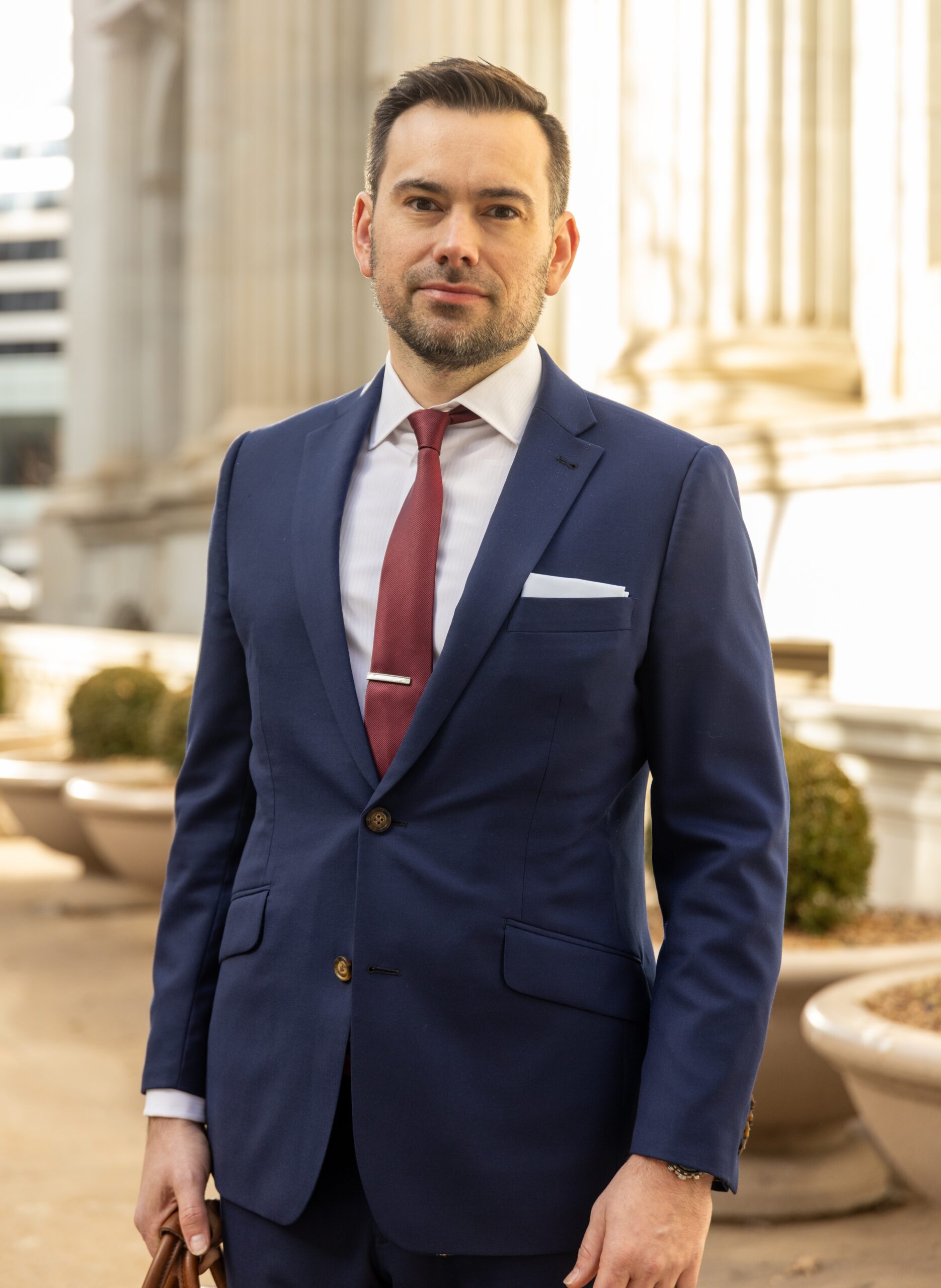
David Boyer, Partner at Evergreen Attorneys, concentrates on federal appeals, post-conviction motions, federal sentencing, and supervised release matters. His practice includes direct appeals to the federal circuit courts, § 2255 motions, § 2241 petitions, and other post-conviction remedies.
The firm’s appellate work covers cases involving white collar crime, healthcare fraud, drug conspiracy convictions, firearms offenses, and other serious federal charges. Evergreen Attorneys serves clients across the country, including defendants convicted in any of the District of Minnesota’s four divisions.
Evergreen Attorneys won 9-0 in the U.S. Supreme Court in United States v. Hemani in June 2026.
How Evergreen Attorneys Handles Federal Criminal Appeals from Minnesota
The firm’s approach to challenging federal criminal convictions in Minnesota follows a structured process designed to identify and develop the strongest available grounds for appellate relief.
First, counsel reviews the complete district court record, including trial transcripts, sentencing memoranda, plea agreements, pre-sentence investigation reports, and all relevant motions and orders. This review identifies which legal issues were preserved for appeal and which standards of review the Eighth Circuit will apply.
Second, counsel analyzes the applicable law, including Eighth Circuit precedent, relevant Supreme Court decisions, and the federal sentencing guidelines. The goal is to determine whether the district court committed reversible error in its evidentiary rulings, jury instructions, constitutional determinations, guideline calculations, or other decisions.
Third, counsel prepares and files the opening appellate brief, presenting the arguments in a form that addresses the Eighth Circuit’s standards and procedural expectations. Oral argument may be requested when the case presents issues that would benefit from direct presentation to the panel.
For defendants whose cases involve issues beyond the scope of a direct appeal, Evergreen Attorneys also evaluates whether post-conviction remedies, including § 2255 motions or other collateral challenges, may be appropriate.
Frequently Asked Questions
Which federal appellate court hears appeals from Minnesota?
Federal criminal appeals arising from the U.S. District Court for the District of Minnesota are heard by the U.S. Court of Appeals for the Eighth Circuit. The Eighth Circuit’s jurisdiction covers Minnesota along with several other states. The District of Minnesota maintains divisional offices in Minneapolis, St. Paul, Duluth, and Fergus Falls, and appeals from all four divisions proceed to the same appellate court.
What is the deadline to file a federal criminal appeal in Minnesota?
Under Federal Rule of Appellate Procedure 4(b), a defendant generally must file a notice of appeal in the district court within 14 days after entry of the judgment or order being appealed. If a timely post-trial motion is pending, the deadline may run from the order disposing of the last qualifying motion. Plea agreements may also contain waivers that affect the right to appeal. Because of this short window, defendants should begin evaluating appellate options immediately after sentencing.
What issues can be raised in a Minnesota federal criminal appeal?
A federal criminal appeal may challenge preserved legal errors such as the admission or exclusion of evidence, erroneous jury instructions, improper trial rulings, constitutional violations, and sentencing calculation errors. The Eighth Circuit generally reviews the existing district court record and does not conduct a new trial or receive new evidence. Issues that were not properly preserved at the trial level may be reviewed only for plain error, which is a significantly higher standard.
Can a guilty plea be appealed in federal court?
A guilty plea does not automatically eliminate every possible appellate issue, but it does substantially narrow the available grounds. Plea agreements frequently contain appeal waivers that limit review of the sentence and other issues. Potential grounds for appeal after a guilty plea can include challenges to the validity of the plea itself, the district court’s compliance with required procedures (such as the Rule 11 colloquy), the sentence if not covered by an enforceable waiver, or constitutional issues that affect the plea’s voluntariness.
When should someone begin evaluating a federal criminal appeal from Minnesota?
A person should begin evaluating appellate options immediately after the judgment or sentencing. The criminal notice of appeal deadline is generally 14 days under Federal Rule of Appellate Procedure 4(b), and missing this deadline can permanently foreclose a direct appeal. Early review allows counsel to identify preserved issues, obtain transcripts, examine any plea agreement for appeal waivers, and determine whether a direct appeal or another post-conviction remedy is the most appropriate path forward.
If you are facing a federal criminal appeal from the District of Minnesota or the Eighth Circuit, speak with an experienced federal appeals attorney at Evergreen Attorneys at (303) 948-1489 to understand your options and protect your appellate rights.

David Boyer
It was David’s passion for the law and helping others that led him to becoming an attorney. He particularly enjoys appellate and post-conviction work.
David is proud to offer representation nationwide from his office in Plano, Texas.
STAY IN THE LOOP
Subscribe to our free newsletter.

Written By Zachary Newland, Founding [...]