Share
Share

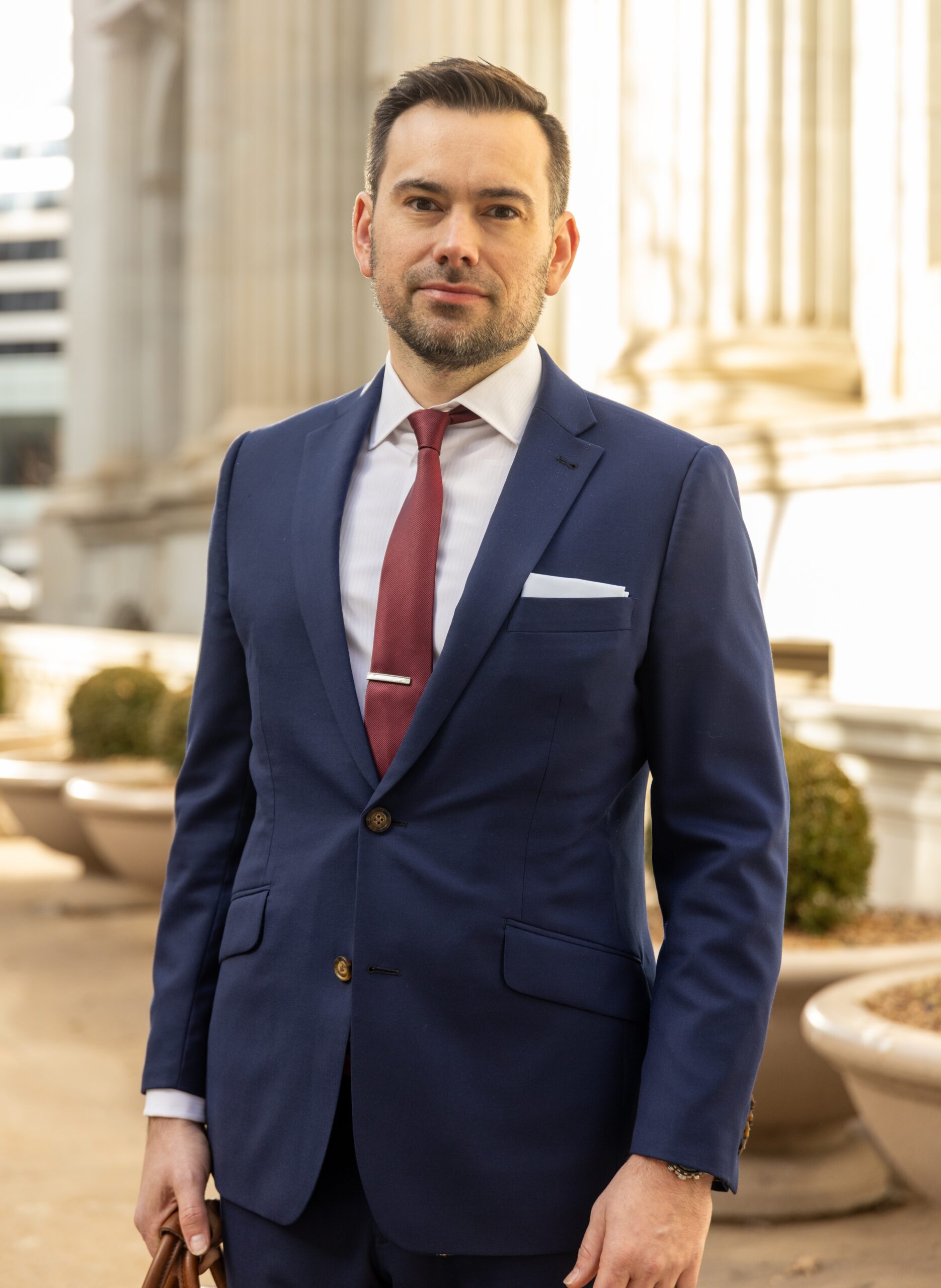
Written by Zachary Newland, Founding Partner. Last updated August 14, 2026.
Corporate Prosecution: How the DOJ Decides Whether to Charge Your Business
On This Page
- What Corporate Prosecution Means Under Federal Law
- How the DOJ Decides Whether to Charge a Business Organization
- Individual Accountability for Corporate Misconduct
- Compliance Programs, Voluntary Self-Disclosure, and Remediation
- What to Do if Your Business Faces a Federal Investigation
- How Evergreen Attorneys Can Help
- Frequently Asked Questions
A federal corporate prosecution can end a company. It can freeze bank accounts, trigger debarment, destroy professional licenses, and expose individual officers and employees to personal criminal liability. If your business is under federal investigation, the question is not whether the government has authority to charge a corporation; it does. The question is what factors federal prosecutors weigh when deciding whether to bring those charges, and what you can do now to affect the outcome.
Understanding the DOJ’s framework for corporate prosecution is the first step. The principles that guide these decisions are published in the DOJ Justice Manual, Principles of Federal Prosecution of Business Organizations, and they control how every federal prosecutor in the country evaluates business-organization cases.
What Corporate Prosecution Means Under Federal Law
Corporate prosecution refers to the federal government’s decision to bring criminal charges against a business organization, as distinct from charging only the individuals who carried out the misconduct. Under federal law, a corporation can be held criminally liable for the acts of its employees, officers, and agents when those acts are committed within the scope of their authority and are intended, at least in part, to benefit the organization.
This is a form of vicarious liability for employee crimes. The government does not need to prove that senior leadership personally directed the wrongdoing. For example, if a senior-level manager commits wire fraud under 18 U.S.C. § 1343 in the course of company business, the organization itself can face prosecution for that conduct.
The practical stakes are severe. A corporate conviction can result in massive fines, restitution orders, court-imposed compliance monitors, probation, and collateral consequences that may include loss of government contracts, professional licenses, or the ability to operate in regulated industries. For health care companies facing charges under statutes like 18 U.S.C. § 1347, a conviction can trigger exclusion from Medicare and Medicaid, which effectively shuts down the business.
How the DOJ Decides Whether to Charge a Business Organization
The DOJ principles of federal prosecution of business organizations set out the factors prosecutors must consider before bringing charges against a company. These factors are not a mechanical checklist. They require the exercise of prosecutorial discretion, and different factors carry different weight depending on the facts of the case.
Offense Severity and Organizational Conduct
- The nature and seriousness of the offense, including the risk of harm
- The pervasiveness of wrongdoing within the organization
- The company’s history of similar conduct and prior enforcement actions
Compliance, Disclosure, and Cooperation
- The existence, adequacy, and effectiveness of a corporate compliance program
- Whether the company voluntarily disclosed the misconduct
- The company’s willingness to cooperate with the investigation
Remediation and Alternatives to Indictment
- Remedial actions the company has taken
- Collateral consequences to shareholders, employees, and the public
- The adequacy of prosecuting responsible individuals rather than the entity
Prosecutors also consider whether alternative remedies, such as civil penalties, regulatory sanctions, or deferred prosecution agreements, adequately address the misconduct without the collateral damage of a corporate indictment.
U.S. Supreme Court Winning Defense Team
Evergreen Attorneys won 9-0 in the U.S. Supreme Court in United States v. Hemani in June 2026, reflecting the caliber of federal criminal defense the firm brings to high-stakes federal matters.
Individual Accountability for Corporate Misconduct
One of the most important aspects of the DOJ’s corporate prosecution framework is its emphasis on individual accountability. The Justice Manual makes clear that prosecutors should focus on identifying the individuals responsible for criminal conduct, even when the corporation itself is also under investigation.
This means that a corporate investigation frequently becomes a personal criminal matter for executives, officers, managers, and employees. The government may use cooperation agreements with the company to identify which individuals directed, approved, or knew about the misconduct. Employees who believed they were acting on behalf of the company may find themselves personally exposed to federal charges carrying years of imprisonment.
For business owners and executives, the distinction between corporate liability and individual liability is critical. The government’s theory of the case often moves in both directions: charging the company creates pressure on individuals to cooperate, while pursuing individuals can generate evidence against the organization. Understanding how the DOJ evaluates this interplay is essential to building an effective federal white collar crime defense strategy.
Compliance Programs, Voluntary Self-Disclosure, and Remediation
Three factors in the DOJ’s corporate prosecution framework deserve particular attention because they are areas where the company’s own decisions directly influence the charging outcome.
A corporate compliance program is evaluated based on whether it was well-designed, adequately resourced, and effectively implemented at the time of the misconduct. A program that exists only on paper will not earn credit. Prosecutors look at whether the program detected and addressed the misconduct, whether compliance personnel had access to senior leadership, and whether the company enforced its policies consistently.
Voluntary self-disclosure means the company brings the misconduct to the government’s attention before being required to do so. Under recent DOJ policy, timely and complete disclosure can significantly affect the charging decision, including eligibility for reduced penalties or declination. The value of disclosure depends on timing, completeness, and whether the company couples it with genuine cooperation and corrective action.
Remediation refers to the concrete steps the company takes to address the misconduct after it is identified. This includes disciplining responsible employees, improving compliance controls, and making victims whole where possible. Prosecutors evaluate whether the company’s response demonstrates a genuine commitment to lawful conduct going forward.
Each of these factors involves difficult judgment calls. The decision to self-disclose, for example, can expose the company to liability it might otherwise have avoided if the government never independently discovered the misconduct. These decisions require experienced federal defense counsel who understands both the legal framework and the practical dynamics of federal enforcement.
What to Do if Your Business Faces a Federal Investigation
If your company has received a federal target letter, a civil investigative demand, agent contact, or a grand jury subpoena, the steps you take immediately will shape everything that follows.
- Retain experienced federal defense counsel before responding to any government request or producing any documents.
- Preserve all potentially relevant records, communications, and data. Destruction of evidence after an investigation begins can result in obstruction charges that are often more serious than the underlying conduct.
- Identify the scope of the government’s inquiry. Determine whether the investigation targets the company, specific individuals, or both.
- Assess your existing compliance program honestly. Understand where it worked, where it failed, and what the government is likely to find.
- Evaluate whether voluntary self-disclosure is advisable based on the timing, the strength of the government’s existing evidence, and the potential benefits under DOJ policy.
- Do not allow employees to be interviewed by federal agents without counsel. Individual statements made during an investigation can become the basis for both corporate and personal charges.
Every one of these decisions involves legal risk, and the wrong choice, particularly on document preservation, disclosure timing, or employee interviews, can create new criminal exposure for the company and its leadership.
How Evergreen Attorneys Can Help
Evergreen Attorneys focuses exclusively on federal criminal defense, including corporate investigations, white collar enforcement matters, and cases involving individual accountability for corporate misconduct. Founding Partner Zachary Newland has appeared as counsel of record in more than 130 federal cases since 2016 and brings real-world federal defense experience to corporate prosecution matters.
The firm works with business owners, executives, and corporate counsel to analyze the government’s theory, assess exposure under the DOJ’s corporate prosecution framework, evaluate the risks and benefits of voluntary self-disclosure and cooperation, and develop a corporate criminal defense strategy that accounts for both organizational and individual liability. That work is most effective when it begins before charges are filed, during the investigation stage when the government’s charging decision is still being made.
Frequently Asked Questions
What are the DOJ principles of federal prosecution of business organizations?
The DOJ’s principles for corporate prosecution are the factors federal prosecutors use when deciding whether to charge a business organization. The Justice Manual explains that prosecutors evaluate the seriousness of the offense, the pervasiveness of wrongdoing, prior misconduct, the company’s compliance efforts, cooperation, remediation, and the adequacy of individual prosecutions and other remedies. The framework is designed to determine whether criminal charges against the company serve a substantial federal interest, or whether other approaches better address the misconduct.
Can a corporation be prosecuted for employee crimes?
Yes. Under federal law, a corporation can act only through individuals, and prosecutors may hold the organization responsible for conduct fairly attributable to it. That does not mean every employee mistake becomes corporate liability, but misconduct by employees, managers, or agents can create criminal exposure for the organization depending on the scope of the conduct, whether it was intended to benefit the company, and how the company responded once it learned of the problem.
What factors does the DOJ consider when deciding whether to charge a company?
According to the DOJ’s corporate prosecution guidance, prosecutors weigh the nature and seriousness of the offense, the pervasiveness of the misconduct, the company’s history of similar conduct, the adequacy of its compliance program, voluntary disclosure, cooperation, remedial actions, collateral consequences, and the adequacy of individual prosecutions. These factors are not applied with equal weight in every case. They are part of a broader charging decision that reflects prosecutorial discretion and federal enforcement priorities. A Congressional Research Service report on corporate criminal liability provides additional analysis of the legal framework.
What is voluntary self-disclosure in a corporate investigation?
Voluntary self-disclosure means the company brings misconduct to the government’s attention on its own, before the government learns the full extent of the problem from another source. Under DOJ corporate enforcement policy, disclosure can affect whether prosecutors charge the company and how they evaluate cooperation and remediation. The value of disclosure depends on timing, completeness, and whether the company follows through with a meaningful internal investigation and corrective action.
When should a business involve federal defense counsel in a corporate investigation?
A business should retain federal defense counsel as soon as it learns of a potential federal investigation, receives any form of government inquiry, or discovers internal conduct that may constitute a federal offense. The charging factors prosecutors evaluate, including cooperation, disclosure, and remediation, are assessed based on what the company did from the earliest stages of the investigation. Waiting until charges are filed or a grand jury subpoena arrives often means the most important decisions have already been made without legal guidance.
If you are facing a federal corporate investigation or potential corporate prosecution, contact Evergreen Attorneys at (303) 948-1489 for a confidential case evaluation.

Zachary Newland
Zachary Newland is an attorney, author, aspiring BBQ connoisseur, and enthusiastic, but mediocre skier. Zachary's law practice is focused on federal criminal defense, federal appellate advocacy including post-conviction remedies, civil rights litigation, and complex trial work. Zachary lives in Evergreen, Colorado with his family. Reach out today
STAY IN THE LOOP